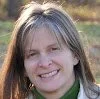
Walk with Jen Roberts: Seeing Nature, Place, and Belonging Through a Wider Lens
Episode Summary: What does access to nature really mean?
In this conversation, Susan sits down with public health researcher Jen Roberts to explore the intersection of nature, equity, and belonging. Together, they examine how our environments—both built and natural—shape not only our ability to be outside, but whether we feel like those spaces are actually for us.
Jen shares how her work in active living and public health led her into the nature space, and how that work expanded to include a deeper question: who has access to nature, and who feels welcome once they get there?
Susan and Jen also explore the story of Buffalo’s historic parkways—once designed for connection and movement—and how their removal reshaped both land and community.
This conversation invites a wider lens.
Because access to nature isn’t always as simple as it seems—and sometimes, the deeper question is whether we feel like we belong there at all.
SHOW NOTES
Modern life makes it easy to assume that access to nature is simply about proximity. A nearby park. A trail down the road. A place to go.
But what if access is more complicated than that?
In this conversation, I sit down with public health researcher Jen Roberts to explore the intersection of nature, equity, and belonging. Together, we look at how our environments—both built and natural—shape not only our ability to be outside, but whether we feel like those spaces are actually for us.
Jen shares how her work in active living and public health led her into the nature space, and how that work expanded to include a deeper question: who has access to nature, and who feels welcome once they get there?
We also explore the story of Buffalo’s historic parkways—once designed for connection and movement—and how their removal reshaped both land and community.
This conversation invites a wider lens.
Because access to nature isn’t always as simple as it seems—and sometimes, the deeper question is whether we feel like we belong there at all.
Key Themes
Nature, equity, and belonging
Active living and public health
Access to nature beyond proximity
Built environments and community wellbeing
Forest bathing and nervous system regulation
The history of Buffalo’s parkways and environmental justice
Key Takeaways
Access to nature is not just about distance — it’s also about belonging.
Wellness recommendations often overlook environmental and social realities.
Nature connection can happen in small, meaningful ways.
Infrastructure decisions shape community wellbeing for generations.
Outdoor spaces feel different when people can see themselves reflected there.
“Access to nature isn’t just about proximity — it’s about whether you feel like you belong there.”
Reflection Prompt
Where in your own life do you feel a genuine sense of belonging outdoors?
And where might there be spaces you’ve never fully considered through someone else’s experience?
Connect with Jen & Resources from This Episode
Website: jenniferdeniseroberts.com
Linkedin: https://www.linkedin.com/in/jenniferroberts1974/
https://sph.umd.edu/people/jennifer-d-roberts
Resources referenced
Forest bathing / Shinrin-yoku
Nature Rx initiatives
Frederick Law Olmsted’s Buffalo park system
Humboldt Parkway restoration efforts
Prefer to read? The full transcript is available below.
-
Susan
All right, well, welcome, Jen. How are you today?
Jen Roberts
I am great. Thanks for having me on the show.
Susan
I am so excited you're here. I have to say that in preparing for this, looking at the different work you've done and exploring the different places I was able to find your name and your work, I landed on the simplest description, which is that you seem like the coolest human.
Jen Roberts
I like that one. Well, thank you.
Susan
You’re multifaceted, which really excites me about this conversation today. So leaning into that, let’s open the door to those who are listening to understand a little bit about your multifacetedness.
And I would say, since we’re here to talk about nature and wellbeing, let’s start with the basics. How did you find your way to that connection in your work?
Jen Roberts
Probably in a roundabout way. It probably was always there, maybe from childhood, because I always had so much fun playing in nature and just being outside.
But my work deviated from that, or it just didn’t intersect with that until much later in life.
When I did a fellowship and started to meet some other colleagues, who are now friends, who were in this whole nature space, I started to collaborate with them and realized it was more than just work. It was really fun and it felt natural, no pun intended.
From there, it just kind of skyrocketed in terms of other opportunities to engage in nature, whether it was through research or scholarship or setting up workshops and anything and everything to do with nature.
I would say that probably ignited right around the pandemic and has just been growing ever since.
Susan
I love that. We’ll go back to the pandemic connection.
I’m curious what the foundational career focus was for those who are listening who don’t know you. Your background is in what?
Jen Roberts
My background hasn’t really had a linear trajectory, but I would say overall the common thread is public health.
When I finished grad school, I was focused on environmental health and environmental engineering, and I did that for about five or six years in different places in the United States with two different firms I worked at.
Then I wanted a change for a variety of reasons and entered the world of active living.
What I mean by active living is basically how you live your life in such a way that you can engage in movement and not be as sedentary or stationary. Something simple is maybe you can walk to the store instead of driving.
I also wanted to not be a consultant anymore and become an academician.
I started at one university and then moved to University of Maryland in 2015 and have been in the Department of Kinesiology ever since.
When I started at the department, it was very much physical activity focused. While I still do have that focus, I’ve broadened it to active living because I feel like that’s a little bit more chewable for the average person.
I think people automatically think it’s very structured, that they have to go to the gym.
But I think active living is a term people are curious about. They’re a little bit more receptive to it.
Then when you start to think about where you want to be actively living, a lot of it is outdoors. That’s kind of how I landed on nature.
Susan
I love it. I had our mutual connection, Jay Maddock, on, and he talked about being active outdoors as being like a Reese’s Peanut Butter Cup. It’s better together.
Jen Roberts
I like that analogy. Me and Jay would definitely connect because I love food and I think Jay is a foodie too.
So yeah, I like that analogy.
It’s definitely better together. Research has shown that when you’re outside, you usually engage in the activity longer.
If someone said, “Go walk on the treadmill for 30 minutes,” you’re probably going to think that sounds long. It probably does seem boring because you’re just looking at one screen.
I know some gyms try to orient their treadmills to look outside, but that just makes you want to go outside more.
You’re constantly looking at the clock like, “It’s only been five minutes. It’s only been six minutes.”
But when you’re walking outside, those 30 minutes can fly by because you’re engaged in so many other aspects.
Before you know it, you’re like, “Wow, I’ve been walking an hour.”
So I think it’s definitely better together.
Susan
It’s definitely better together.
I’ve been in the corporate wellbeing space for 25 years, and so many conversations are popping up for me that I’ve had over the years with employers.
I was just working on a strategy today for a client, and the base of the opportunity they have is to help their team members move more.
But boy is that not always easy when you’re in a manufacturing plant and you’re stuck in one spot on a line for hours a day.
That’s not necessarily the challenge we’re going to solve today, but another piece that comes up for me is how we can do what we can do in the workplace, but if we can’t fix it in the workplace, then we say it falls upon the responsibility of the individual at home.
That can sound easy, but the reality can be hard.
I can think of so many examples of organizations over the years where they wanted to do a walking challenge, but if employees were located somewhere where there weren’t sidewalks for them to go and do that in their free time, that might sound easy, but it’s not really easy.
So just thinking about movement outdoors, which I know you are passionate about, I’m curious what comes up for you when I bring up these examples.
Jen Roberts
One of the biggest aspects of my work is equity and inequity.
I like to call myself an active living health equity scholar because it’s very easy to say, “Go outside, go for a walk, get your 30 minutes in.” But like you said, that’s not always easy to do.
We have to think about the constraints, whether they’re environmental constraints, built environment constraints, lack of natural space, social constraints, or constraints from labor.
Maybe you’re a single dad and you’re wondering who’s going to watch the kids while you’re outside.
Maybe you work a 12-hour shift and you’ve been on your feet all day.
We have to make sure that when we’re making these recommendations, we take into account all the nuances of how everyone’s lives are different and how it may not be as easy, and how we can make it more equitable.
In the meantime, while we’re working on that big heavy lift, I always say try to get at least a 10-minute dose of nature.
Some people will say, “What about the grandma who’s inside who can’t go down the stairs or who’s afraid to go down the stairs?”
And I’m like, okay, can we set up a recording? Can grandma get on YouTube and listen to nature sounds?
I think a lot of times people think your dose of nature has to hit on all five cylinders.
You don’t have to hike the Grand Canyon in the middle of the morning dew.
That would be wonderful, but you don’t have to do all that.
Sometimes you can get your nature dose just from sound.
Maybe grandma can sit in her favorite chair and close her eyes and listen to the songbirds.
Maybe if she feels comfortable, she might be able to open up her window and listen and smell that spring morning.
So there are different aspects in which you can get that nature dose, and it still will have many of the same benefits.
Susan
As I shared before we started recording, I’m recovering from being ill, and I fortunately was able to get myself bundled up and sit in a park for an hour each day over the weekend because I knew that was actually going to be better for me than just sitting inside the entire day.
But even when I was stuck inside, I was opening the window just so I could hear the birds. And that little bit makes such a difference.
Jen Roberts
It really does make a difference.
I think a lot of us, no matter where you may sit in terms of how you believe in higher powers or higher beings, can’t dispute the wonderment and awe of seeing a hundred-year-old tree, or listening to birds, or even watching birds fly in that unison.
How do they know who’s going to be first? How do they know who’s going to be at the peak of the V?
There are a lot of things you can get out of nature from something very simple.
Susan
I was thinking about that recently when I saw a flock of geese. It’s really incredible.
And then you’re also like, how?
I don’t know if we’ll ever know.
Well, I thank you for sharing those examples.
I think what you hit upon, and what we’ve hit upon a few times in previous interviews, is that not everyone has equal access.
Susan
I use the NatureDose app because I learned about it from Jay.
I am fortunate to live in a lovely spot, but I also live north of Detroit where the scores are not so high.
I know that part of your work focuses on inequity of access and opportunity. Can you say more about what that looks like and what that means for you and how you focus on that?
Jen Roberts
When I talk about inequities to nature exposure, I talk about it not only in terms of actual access to get to a space, but also the sense of belongingness in that space.
You could have a park right across the street from your house or near where you work, but you may not feel a sense of belonging there.
Maybe you experienced microaggressions there. Maybe you heard something happened there. Perception is quite powerful.
A lot of times we can get very focused on geographical access and spatial data and say, “Wow, there’s a high density of green space near where you live.”
But you also have to look at belongingness and the characteristics of those parks and green spaces and how they make people feel welcome.
It could be activities oriented toward certain cultures or groups. It could be representation.
If people don’t feel that those spaces are for them, they won’t go.
Susan
I’m really inspired by the term belonging in this space.
When I hear belonging, I think about workplace culture and helping organizations design cultures where people feel they belong.
Say more about how that applies in the natural environment.
Jen Roberts
There’s a long history tied to wilderness in this country and who those spaces were designed for.
There’s the issue of Indigenous land dispossession and the complicated relationship many Black Americans have had with land because of slavery and land-based trauma.
That historical baggage doesn’t disappear overnight.
There’s also what I call the construct of a white wilderness space.
I had a colleague who went hiking with a group of Black women, and there were a lot of microaggressions. People kept asking, “How did you guys hear about this place?”
For some people, those experiences become deterrents.
If you don’t feel like those spaces are for you, then you won’t go.
That’s what I mean by belongingness.
Susan
Are there efforts in place to counter this? To heal this history?
Jen Roberts
There are efforts, although I think awareness has to come first.
There are groups trying to bring more people of color into green spaces and outdoor experiences.
One colleague has a group called Boys in the Woods for Black boys and Black men.
REI has also funded a number of initiatives around this.
There are groups trying to address why some communities haven’t historically frequented these spaces.
Susan
If someone running a local park system was listening to this conversation, is there advice you would give them?
Jen Roberts
I would think about who is using the park and who isn’t.
Find community members who are not currently engaging and ask why.
Sometimes belonging comes from simply seeing something connected to your culture or identity represented in the space.
Maybe one group connects with yoga in the park, but another group would connect with Zumba or mahjong or another kind of gathering.
If you can’t see anything that represents you or your community, you won’t feel that belonging.
Susan
Outdoor spaces really do provide such an amazing opportunity for connection.
Jen Roberts
They definitely do.
Susan
We talked a little bit about nature as medicine.
You’re part of the UMD campus and NatureRx for students. What does that look like?
Jen Roberts
Before the pandemic, our intention was to create actual nature prescriptions.
Students might receive a prescription recommending they spend time outside or take a 10-minute walk in nature as a supplement to existing treatment.
But then the pandemic happened and healthcare systems became overwhelmed.
During that time, I also started reflecting more deeply on what NatureRx meant.
On one hand, prescriptions legitimize the idea of a nature dose.
But on the other hand, I became uncomfortable with the idea that nature needed to be legitimized through a Western medical framework.
So while we still encourage students and staff to get outside, we’ve broadened how we think about it.
We still do events, including forest bathing experiences.
Susan
For those listening who aren’t familiar with forest bathing, can you explain what it is?
Jen Roberts
Forest bathing is a Japanese practice called Shinrin-yoku.
It’s about immersing yourself in nature and intentionally engaging all five senses.
Usually there’s a guide who leads you through invitations to focus on different aspects of the environment.
The first time I did it, we focused on individual details — a leaf, a sound, the movement of trees.
At one point we laid on our backs in the forest and looked upward through the canopy.
It completely changed the way I experienced the forest.
It’s very relaxing.
Susan
I’ve heard that in some places in Japan they’ll take your blood pressure before and after forest bathing and it almost always goes down.
Jen Roberts
I would absolutely believe that.
Susan
You also founded the Waukesa Earth Center.
Jen Roberts
Yes. I received funding through the REI Cooperative Fund to create the center.
It became a space for researchers and practitioners interested in land, belonging, healing, and nature to gather and collaborate.
One of the first gatherings brought scholars together at Ghost Ranch in New Mexico.
Most of our time was spent outside talking about wilderness, belonging, and our relationship to land.
It was a really meaningful experience.
Susan
And you’re writing a book.
Jen Roberts
Yes. The book focuses on Buffalo’s historic Olmsted park system and how environmental racism contributed to the destruction of Humboldt Parkway.
Buffalo was the first city to have a coordinated park system designed by Frederick Law Olmsted.
The parks and parkways were originally connected so people could move continuously through green space.
Later, highways were built through predominantly Black neighborhoods, and Humboldt Parkway was destroyed.
That highway divided neighborhoods, redirected traffic, harmed businesses, and removed a major green corridor.
There are also major health implications connected to living near highways.
Now there’s an environmental justice movement pushing for restoration.
We recently won a lawsuit requiring the Department of Transportation to revisit its environmental impact analysis.
So in many ways, the final chapter of the story is still being written.
Susan
Congratulations on that win.
Jen Roberts
Thank you. Buffalo is my hometown, and I really believe restoring that space could have benefits far beyond what policymakers even realize.
Susan
Before we move into the lightning round, is there anything else you’d like listeners to hear from you?
Jen Roberts
At the end of the day, I’m just someone who really loves being outside, and I want other people to have that enjoyment too.
There’s such a strong marriage between my work, my scholarship, and how I live.
Because of that, I can advocate for it honestly because I truly believe in it.
Susan
Perfect.
Let’s move into the lightning round.
What I call this section is Natural Favorites.
A plant or animal that you identify with and why.
Jen Roberts
Probably an animal.
I really have this thing with woodpeckers.
I don’t get to see them a lot, but when I do, I’m amazed because I’m like, “How are you holding on and not getting a headache?”
I’m mesmerized by the skill they have.
Susan
A sound in nature that grounds you.
Jen Roberts
Probably ocean sounds.
Susan
Favorite time of day to be outside?
Jen Roberts
Morning, even though I’m not a morning person.
When I do see the sunrise, I’m always like, “This is gorgeous.”
Susan
A daily or weekly practice that keeps you connected to nature.
Jen Roberts
Walking my dogs.
That’s my ritual.
Susan
And finally, imagine you have a dandelion in your hand that has gone to seed.
What wish do you have for nature and humanity?
Jen Roberts
That we can protect nature and preserve it.
Because I think if we do that, it will also protect humanity.
There’s a seven-generation principle from the Haudenosaunee people that says you shouldn’t take more from the Earth than you need and you should leave it intact for at least seven generations.
I wish we could live more like that.
Susan
I’m on board.
Thank you for your time today. It has been so much fun talking with you.
Jen Roberts
It has been fun talking with you too. Thank you.